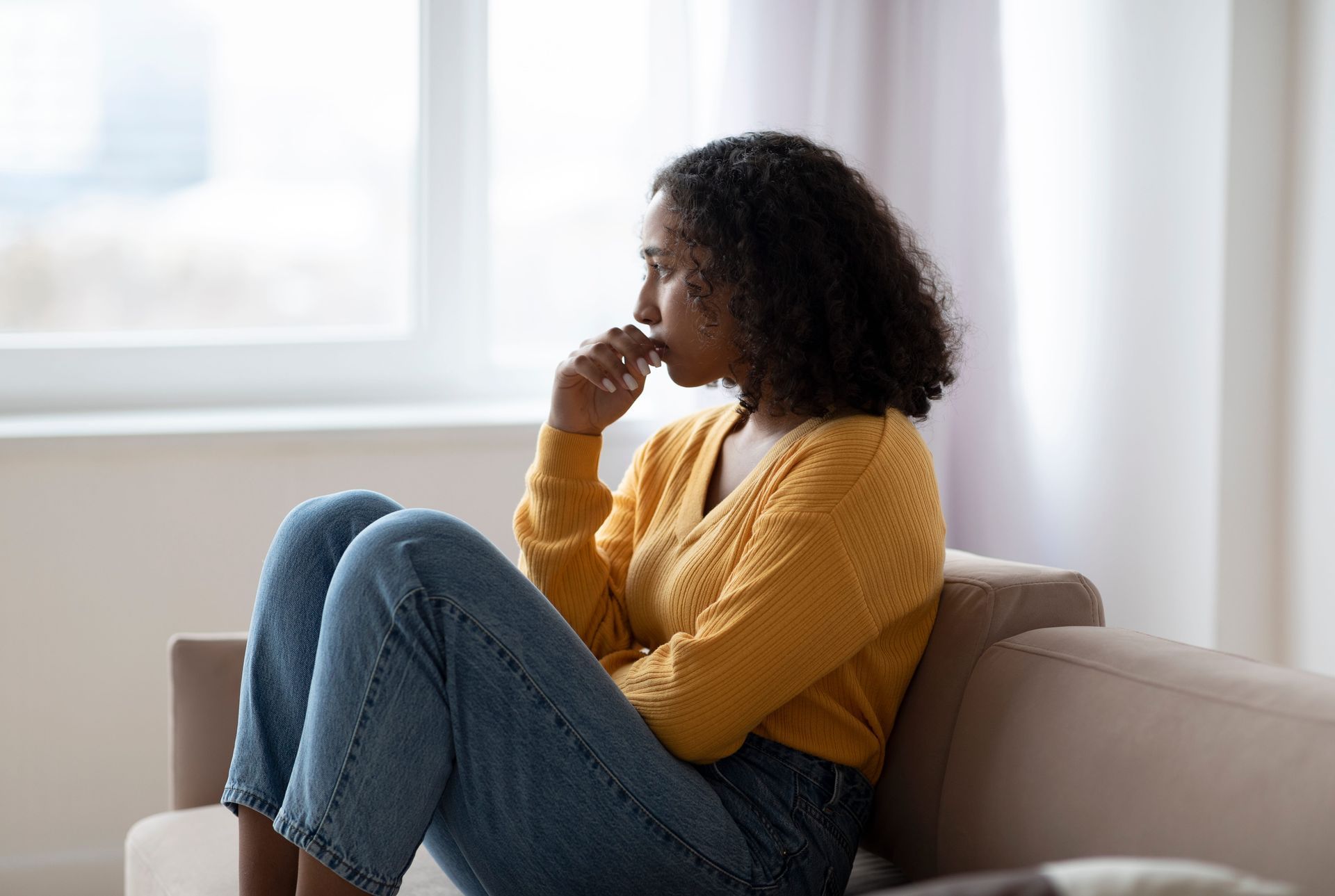
Something feels off in your relationship. You can’t quite name it. Your partner isn’t the loud, arrogant type you’ve seen described online. They seem sensitive. Wounded, even. But you’re the one who ends up apologizing for everything. You’re the one walking on eggshells. You’re the one who feels like you’re slowly disappearing.
You might be dealing with covert narcissism, a pattern that’s far harder to see than the classic narcissist, and in many ways far more damaging because of how long it goes unnamed.
This post is for people who sense something is wrong but can’t put their finger on what. It’s about understanding covert narcissism, recognizing the signs of a covert narcissist in your relationship, and knowing when it might be time to get support.
What Is Covert Narcissism?
Narcissistic personality disorder exists on a spectrum. Most people picture the overt narcissist, the extroverted, attention-seeking type who brags openly, demands admiration, and has no apparent awareness of other people’s feelings. That’s the grandiose subtype, and it’s easy to spot.
Covert narcissism, sometimes called vulnerable narcissism, is a different expression of the same underlying personality disorder. The covert narcissist doesn’t look grandiose. They look like a victim. They appear introverted, sensitive, quietly suffering. But underneath that presentation are the same core narcissistic traits: a lack of empathy, an excessive need for validation, and a sense of superiority that they hide rather than broadcast.
Covert narcissism is not a formal clinical diagnosis on its own, it’s a subtype within
narcissistic personality disorder. What makes it so difficult to recognize is precisely that it doesn’t match the image most people have of “a narcissist.” That gap between expectation and reality is exactly what covert narcissists use, often without even realizing it.
Overt Narcissist vs. Covert Narcissist: The Key Difference
Understanding the difference between overt and covert narcissism helps explain why covert narcissism so often goes undetected for years, and why partners of covert narcissists so frequently blame themselves.
- Overt narcissist: Grandiose, loud, openly entitled. Demands admiration. Rarely hides their sense of superiority. Easy to identify from the outside.
- Covert narcissist: Hides behind a vulnerable, wounded presentation. Uses passive-aggressive behavior rather than direct aggression. Appears humble or self-deprecating while still expecting special treatment. Much harder to identify, even for the person living with them.
Both types share the pathological self-centeredness, the lack of genuine empathy, and the inability to sustain truly reciprocal relationships. The difference is in how those traits are expressed, and how long it takes to see them clearly.
Signs of Covert Narcissism in a Relationship
Covert narcissists use subtle tactics that erode your sense of self gradually. Each incident on its own might seem minor or explainable. The pattern, over time, is what reveals itself.
Here are the signs of a covert narcissist that show up most often in relationships:
- They play the victim in almost every conflict. No matter what happened or who started it, the covert narcissist often ends up framed as the one who was hurt. Your reasonable concern becomes an attack on them. Conflicts consistently end with you comforting them.
- Passive-aggressive behavior is their primary tool. Instead of saying they’re angry, they go quiet. The silent treatment, backhanded comments, forgetting things that matter to you, sulking without explanation, these are the covert narcissist’s version of control.
- They’re hypersensitive to criticism. Any feedback, however gently delivered, lands as a devastating attack. You’ve learned to edit yourself constantly. You stop bringing up problems because the emotional reaction that follows isn’t worth it.
- You feel unappreciated and misunderstood, but somehow it’s your fault. Covert narcissists are skilled at making their partners feel responsible for the relationship’s dysfunction. If only you were more patient, more supportive, less demanding, things would be fine.
- They have a victim mentality that never resolves. They are perpetually wronged. By their boss, their family, their friends, their past. The narrative stays consistent: life has been unfair to them, and the people around them don’t appreciate what they’ve been through.
- Manipulation happens through guilt and pity, not aggression. Covert narcissists tend to pull partners back through emotional appeals, their suffering, their need, their fragility, rather than through demands or threats. The result feels like love. It’s control.
- Making you question your own perceptions. You find yourself wondering if you’re too sensitive, too demanding, too much. This confusion is often a direct result of the covert narcissist’s behavior, subtle gaslighting that doesn’t look like gaslighting because it’s delivered through wounded feelings rather than direct denial.
- Low self-esteem that weaponizes. Unlike the grandiose narcissist who broadcasts superiority, the covert narcissist’s low self-esteem is real, but it becomes a demand on you. Your job is to constantly reassure, validate, and minimize yourself so they feel okay.
Why Covert Narcissism Is So Hard to Spot
Most of the cultural conversation about narcissism focuses on the grandiose type. That’s the version in the books, the social media posts, the true crime podcasts. So when you’re in a relationship with a covert narcissist, someone who seems wounded rather than arrogant, introverted rather than attention-seeking, it doesn’t match the template.
People around you may reinforce this confusion. “They seem so caring.” “They’re just insecure.” “Have you tried being more patient?” The covert narcissist’s presentation tends to attract sympathy from outsiders, which makes it harder for the partner experiencing the relationship to trust what they’re seeing.
There’s also the intensity of the early relationship to contend with. Covert narcissists often create deep emotional bonds in the beginning, a sense of being truly seen and understood. When the dynamic shifts, the partner works to get back to that original feeling, often for years, before recognizing that something fundamental has changed.
The Impact of a Covert Narcissist Relationship on Your Mental Health
Relationships with covert narcissists leave specific marks. The effects tend to be cumulative, not one dramatic incident but thousands of small moments that together reshape how you see yourself.
Partners of covert narcissists commonly experience:
- Persistent anxiety and depression from the constant unpredictability
- Feelings of shame and self-doubt that weren’t there before the relationship
- Difficulty trusting their own perceptions and judgment
- People-pleasing patterns that extend beyond the relationship
- A sense of losing themselves, their opinions, preferences, sense of humor, ambitions
- Complex trauma responses that don’t look like “trauma” from the outside
These effects make sense. When someone you love consistently communicates, through words, silence, and behavior, that your feelings aren’t valid, your needs are too much, and your perceptions are wrong, the natural response is to stop trusting yourself. That’s not weakness. It’s an adaptation. And it’s something that can be worked through in therapy.
Setting Boundaries with a Covert Narcissist
One of the most consistent pieces of advice for dealing with a covert narcissist is to work on setting healthy boundaries. This is true, but it’s harder than it sounds, and it’s worth being realistic about why.
Covert narcissists tend to respond to boundaries not with direct aggression but with the silent treatment, sulking, or an increase in victim behavior. Setting a boundary gets reframed as you hurting them. The emotional cost of maintaining boundaries can feel enormous, especially when the response activates your guilt and empathy.
Practice setting boundaries in small, consistent ways rather than waiting for a major confrontation. Notice your own emotional reactions when a boundary is crossed, that physical signal of unease, that pulling-back feeling, as data about the relationship. And understand that boundaries with a covert narcissist are often less about changing their behavior and more about clarifying your own limits for yourself.
A therapist who understands narcissistic relationship dynamics can help you develop realistic strategies for setting boundaries, and help you build the self-trust that makes those boundaries possible to maintain.
Dealing with a Covert Narcissist: What Actually Helps
There’s no clean answer here, and anyone who gives you one is oversimplifying. But there are things that consistently help people in these situations:
- Name what you’re experiencing. Understanding covert narcissism, having language for the pattern, can be profoundly relieving. It doesn’t have to mean diagnosing your partner. It means recognizing that what you’ve been experiencing has a shape, and that shape isn’t your fault.
- Get a realistic view of the relationship. This means seeing both what was real and what wasn’t, what the relationship actually offers versus what you’ve been hoping it would become. A therapist can help you do this without pressure to reach a particular conclusion.
- Rebuild connection with your own perceptions. After a relationship with a covert narcissist, trusting your own thoughts and feelings takes active work. It doesn’t come back on its own. Therapy, journaling, trusted relationships, and time all play a role.
- Don’t expect change without professional help. Covert narcissism is deeply rooted. People with narcissistic personality disorder can change, but it requires sustained, professional therapeutic work, and genuine motivation. It’s reasonable to get support for yourself regardless of whether your partner chooses to seek help.
Narcissistic Relationship Therapy in Petaluma with Karen Collins, LMFT
Karen Collins is a Licensed Marriage and Family Therapist (LMFT #53885) in Petaluma, California, with over 20 years of clinical experience, and personal experience navigating narcissistic abuse.
She works with people who are trying to understand what happened in their relationship, rebuild their sense of self, and figure out what they need next. You can learn more about her approach to
narcissistic relationships therapy on her services page.
If you’ve been in a relationship with a covert narcissist, or you’re not sure yet but something feels deeply off, you don’t have to make sense of it alone.
Sessions are offered in person at 7 Fourth Street, Suite 11, Petaluma, CA. A free consultation is available.
Reach out here when you’re ready, or even just curious.
Frequently Asked Questions About Covert Narcissism
What is the difference between a covert and overt narcissist?
Both share the core traits of narcissistic personality disorder, lack of empathy, need for admiration, and a sense of superiority. The overt narcissist expresses these traits openly and grandiosely. The covert narcissist hides them behind a vulnerable, wounded presentation, using passive-aggressive behavior and victim mentality rather than direct arrogance. Covert narcissism is harder to identify from the outside, which is part of what makes it so disorienting for partners.
Can a covert narcissist change?
People with narcissistic traits can change, but it requires genuine motivation and sustained work with a mental health professional. Covert narcissists rarely seek help voluntarily because their presentation as the wounded party makes it hard for them to see their own role in relationship patterns. If change happens, it tends to be slow and requires a level of self-awareness that doesn’t come naturally to people with narcissistic personality disorder.
Why do I keep defending someone who treats me this way?
This is one of the most common and most painful aspects of these relationships. Covert narcissists are often genuinely charismatic and emotionally compelling in the early stages. The trauma bond that forms is real. Feelings of shame, guilt, and love don’t disappear just because you understand what’s happening, and that’s not a character flaw. It’s a human response to a complicated dynamic.
How does therapy help after a covert narcissist relationship?
Therapy provides a space to name what happened without having to convince anyone of it. A therapist who understands narcissistic abuse can help you rebuild trust in your own perceptions, understand the specific ways the relationship affected you, work through anxiety and depression that often follow, and develop healthy boundaries in future relationships. The emotional support and validation of a skilled therapist can be genuinely transformative after these experiences.
Is covert narcissism a formal diagnosis?
Covert or vulnerable narcissism is a subtype rather than a separate diagnosis, it falls within narcissistic personality disorder as described in the DSM-5. Mental health professionals use the term to describe a specific presentation of narcissistic traits. If you’re concerned about a relationship dynamic, a mental health professional can help you understand what you’re experiencing and what support might look like, regardless of whether a formal diagnosis is involved.
How do I know if I need therapy after this kind of relationship?
Some signs that therapy could help: you struggle to trust your own perceptions, you feel responsible for what happened even though you know that’s not fully accurate, you’re experiencing persistent anxiety or depression, you notice the relationship’s patterns showing up in how you relate to others now, or you feel stuck and unsure how to move forward. These are all normal responses to an abnormal dynamic, and they respond well to the right therapeutic support.
You’re Not Too Sensitive. You’re Paying Attention.
One of the most consistent things people say after recognizing covert narcissism in their relationship is that they felt crazy for so long. That they kept second-guessing themselves. That everyone else seemed to see a different person than the one they lived with.
You weren’t imagining it. Covert narcissism is genuinely hard to see, by design. The confusion you feel isn’t evidence that you’re wrong. It’s evidence that you’ve been in something complicated.
If you’re in the Petaluma or Sonoma County area and you’re trying to make sense of a relationship that left you feeling smaller than you arrived,
Karen Collins is here. You don’t have to have it figured out before you reach out.